
Compare UK Electricity Prices and Lower Your Electricity Bills
Electricity costs have risen sharply over the past few years, and for many households they now represent one of the largest regular outgoings. Yet a significant number of people are still paying more than they need to, sitting on tariffs that haven’t been reviewed in months or even years.
Comparing electricity prices is one of the simplest ways to bring those costs down. It takes a few minutes, requires no engineer visit, and won’t affect your electricity supply for even a moment. Many households find they can save between £150 and £400 a year just by moving to a more competitive tariff.
Whether you’re currently with Octopus Energy, British Gas, EDF Energy, E.ON Next, or any other supplier, there may be a cheaper electricity deal available right now. Free Energy Savings lets you compare tariffs from trusted UK suppliers in one place, so you can see exactly what’s out there and switch when you’re ready.
Compare electricity prices today and find out how much you could save.
Compare Electricity Prices In Minutes
Enter your postcode to see cheaper electricity deals from trusted UK suppliers.

Switch Energy in 3 Simple Steps

Enter Your Postcode
Enter your postcode to compare electricity deals available in your area from trusted UK suppliers.
Compare Energy Deals
Review tariffs, prices, and contract options to find a cheaper deal that suits your household.

Switch and Start Saving
Choose your preferred supplier and switch online in minutes with no interruption to your energy supply.
How Electricity Price Comparison Works
The process is simpler than most people expect. You enter a few basic details, and the comparison tool searches available electricity tariffs across multiple suppliers on your behalf.
To get an accurate comparison, it helps to have the following to hand:
- Your postcode
- The name of your current electricity supplier
- A recent electricity bill, if you have one
That said, you don’t need exact usage figures to get started. If you’re not sure how much electricity your household uses, most comparison tools can apply standard consumption estimates based on your property type. The average UK household uses around 2,700 kWh of electricity per year, so tools can use this as a starting point if needed.
Once your details are entered, you’ll be shown a list of available tariffs, usually ranked by annual cost. You can compare unit rates and standing charges side by side, filter by tariff type, and see green energy options if that’s something you want to consider.
If you find a deal worth switching to, the process is handled online. Your new supplier contacts your existing one and manages the transition. Under Ofgem rules, the switch typically completes within five working days.
And just to be clear on something people often worry about: switching electricity supplier does not change how electricity reaches your home. The local grid operator continues to deliver electricity through the same power lines. The only thing that changes is which company is billing you.

Why Comparing Electricity Prices Matters
When a fixed electricity tariff ends, many suppliers automatically move customers onto their standard variable rate. It happens quietly, often without much fanfare, and a lot of households don’t notice until they see their bills creeping up.
Standard variable tariffs are typically the most expensive option available. They move in line with market conditions and the Ofgem price cap, which means they offer little in the way of price certainty. Customers on these tariffs are also, in most cases, paying more than new customers switching to a competitive fixed deal.
Electricity prices are influenced by a range of factors, including wholesale energy costs, government price cap decisions, and how competitively suppliers are pricing their deals at any given time. The market shifts, and the right tariff for your household today might not be the right one in twelve months.
Comparing electricity tariffs regularly means you’re always aware of what’s available. Even if you don’t switch every year, running a comparison takes very little time and gives you a clear picture of whether you’re getting reasonable value.
Some of the most common reasons households benefit from comparing electricity prices include:
- Reducing monthly bills by moving off a standard variable tariff
- Locking in a fixed rate for price stability over the next year or two
- Switching to a green electricity tariff without paying significantly more
- Finding a supplier with better customer service or billing options
It’s also worth knowing that energy suppliers regularly offer their most competitive rates to new customers. Comparing tariffs puts you in a position to take advantage of that.
Types of Electricity Tariffs Explained
Before you compare deals, it’s worth understanding what the different tariff types actually mean. Here’s a straightforward breakdown.
Fixed Electricity Tariffs
With a fixed tariff, your unit rate and standing charge are set for a defined period, usually 12 or 24 months. Whatever happens to wholesale electricity prices during that time, your rate stays the same.
This makes budgeting easier and protects you if prices rise. The potential downside is flexibility. Some fixed tariffs include exit fees if you want to leave before the contract ends, though many suppliers now offer fixed deals without them. Always check the terms before committing.
Variable Electricity Tariffs
Variable tariffs move in line with the energy market and are subject to the Ofgem price cap. When prices fall, you benefit. When they rise, your bills go up.
These suit households who prefer flexibility and don’t want to be locked in. They can work well if you’re expecting prices to drop, or if you’re planning to move house in the near future and want the freedom to switch without penalty.
Economy 7 Electricity Tariffs
Economy 7 gives you two different electricity rates: a lower overnight rate (usually for seven hours) and a higher daytime rate. The idea is that households shift usage to off-peak hours to bring costs down.
This tariff works well for homes with storage heaters, electric boilers, or electric vehicles that charge overnight. For most standard households, though, the higher daytime rate often cancels out the overnight savings. It’s worth doing the numbers carefully before switching to Economy 7.
Green Electricity Tariffs
Green tariffs are offered by suppliers who back your electricity usage with energy from renewable sources such as wind, solar, or hydroelectric power. Some go further and invest directly in new renewable projects.
The price difference between green and standard tariffs has narrowed considerably over recent years. For households who want to reduce their environmental impact, it’s straightforward to include green tariffs in your comparison and see what the real cost difference looks like.
The Best Electricity Suppliers in the UK
There’s no universal answer to which electricity supplier is best. It depends on your usage, your location, and what matters most to you as a customer. That said, some of the most widely used suppliers in the UK are worth knowing about.
Octopus Energy has built a strong reputation for customer service and offers a range of tariffs including time-of-use options particularly suited to electric vehicle owners and households with smart meters.
British Gas is the UK’s largest energy supplier and offers a broad range of electricity tariffs alongside home services such as boiler cover.
EDF Energy is one of the bigger players in the UK market, with a focus on low-carbon electricity and a range of fixed and variable deals for households.
OVO Energy places sustainability at the centre of its offering, with carbon offsetting included on some plans and a straightforward approach to tariff structures.
Scottish Power is one of the longer-established suppliers in the UK, offering standard and green electricity tariffs to customers across the country.
Different households prioritise different things. Some want the lowest possible unit rate. Others care more about customer service, smart meter support, or green credentials. Comparing several suppliers before making a decision gives you a much more complete picture.
Check current electricity deals from UK suppliers in your area.
How Much Could You Save by Switching Electricity Supplier?
Savings vary depending on your property, your usage levels, and the tariff you’re currently on. But for households on a standard variable tariff, the difference can be meaningful.
As a rough guide:
- Flats: potential savings of £150 to £300 per year
- Terraced houses: potential savings of £200 to £350 per year
- Semi-detached homes: potential savings of £250 to £400 per year
These estimates are based on switching from a standard variable tariff to one of the more competitive deals available at the time of comparison. Your actual saving will depend on your usage and which tariff you move to.
The households that tend to save the most are those who haven’t reviewed their tariff in two or more years. Over that kind of timeframe, the market will have shifted significantly, and the deal they’re on is unlikely to still be competitive.
Even if you’ve switched relatively recently, a quick comparison is worthwhile. Tariffs change regularly, and a deal that wasn’t worth switching to a few months ago may look quite different now.
See how much you could save by comparing electricity prices today.
How to Switch Electricity Supplier: Step-by-Step
Switching electricity supplier is straightforward. Here’s exactly what the process looks like.
Step 1 – Compare electricity prices Enter your postcode, current supplier, and usage details into the comparison tool. Estimated figures are fine if you don’t have exact numbers. You’ll be shown available tariffs ranked by cost.
Step 2 – Choose a tariff Review your options. Look at unit rates, standing charges, whether there are exit fees, and how long the contract runs. Pick the deal that suits your household.
Step 3 – Enter your details You’ll need your name, address, and current account information. The process is handled online and takes a few minutes.
Step 4 – Your new supplier takes over Once you’ve confirmed the switch, your new supplier handles everything. They contact your existing supplier and manage the changeover. You don’t need to do anything else.
Step 5 – Switch completed Most switches complete within five working days under Ofgem rules. You’ll receive a final bill from your old supplier, and your new tariff begins from the agreed start date.
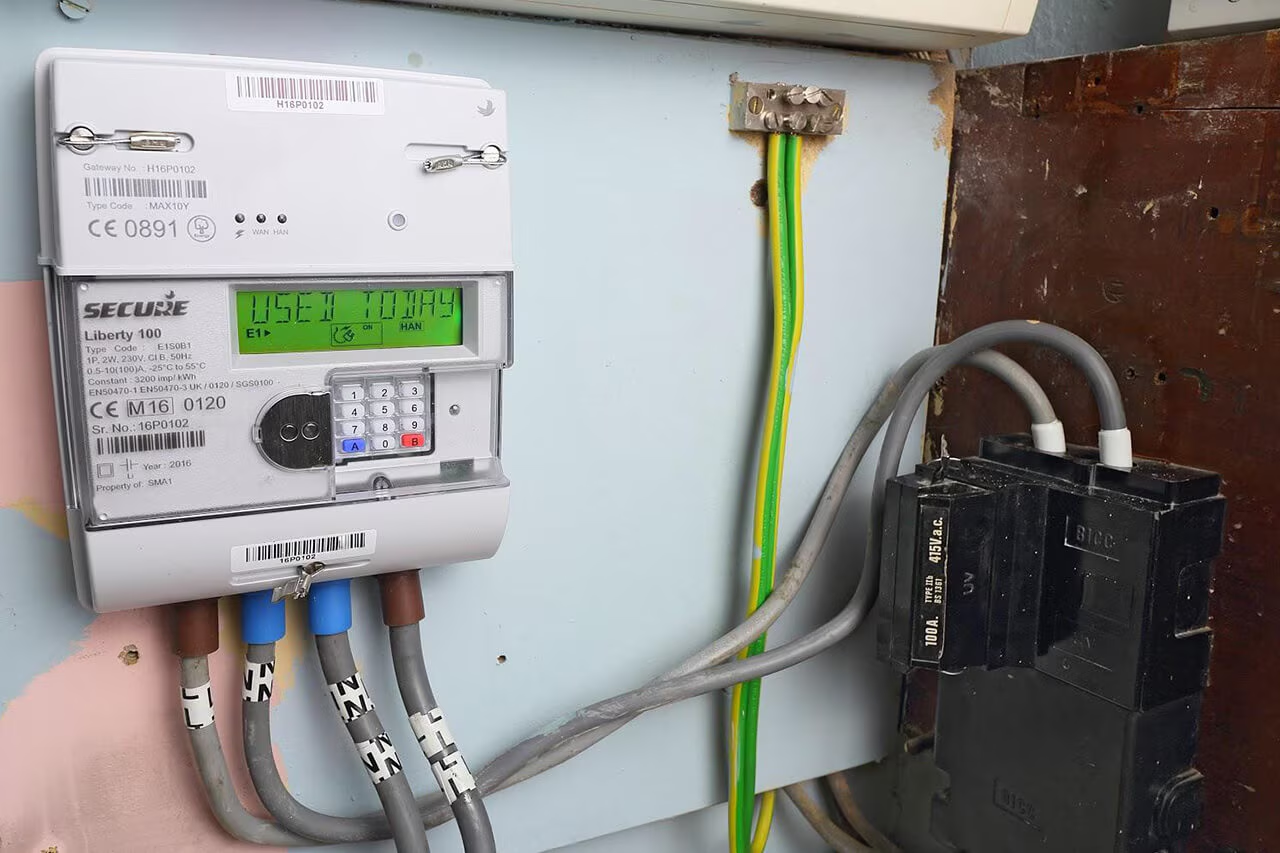
No engineer visit is needed. No wiring changes are made. Your electricity supply continues without interruption from start to finish.

What Information Do You Need to Compare Electricity Prices?
You don’t need much to run a comparison. The basics are:
- Your postcode
- Your current electricity supplier
- Whether you have a single fuel account (electricity only) or dual fuel
If you have a recent electricity bill available, you can also enter your current unit rate and standing charge. This gives you a more precise comparison, since you’ll be able to see exactly how the new tariff stacks up against what you’re paying now.
If you don’t have that information to hand, don’t worry. Comparison tools use average consumption figures based on property type and size. These won’t be exact, but they’re accurate enough to tell you whether there’s a meaningfully cheaper deal available.
The more accurate the information you put in, the more reliable the results. Still, even a broad comparison is usually enough to show whether switching is worth pursuing.

Our Electricity Comparison Process
Free Energy Savings is designed to make electricity comparison as straightforward as possible for UK households.
Here’s how the process works:
Compare electricity deals online — enter your details and see tariffs from multiple trusted UK suppliers in one place, ranked by cost.
Review your options — results are presented clearly, with unit rates and standing charges broken down so you can compare deals on a like-for-like basis.
Choose the tariff that suits you — whether you’re looking for the cheapest available rate, a fixed deal for price certainty, or a green electricity tariff, you can filter results based on what matters to you.
Complete the switch — confirm your choice online and your new supplier handles the rest.
Every supplier shown through Free Energy Savings is an established UK provider. You’re comparing real deals that are genuinely available to switch to.
Why Use Free Energy Savings to Compare Electricity Prices?
There are a few practical reasons households use Free Energy Savings when it’s time to review their electricity tariff.
Everything is in one place. Rather than visiting multiple supplier websites individually and trying to piece together a comparison manually, you can see deals from several suppliers in a single search.
The process is quick. Most comparisons take under ten minutes, including completing the switch if you find a deal worth moving to.
There’s no pressure. You can compare tariffs, review potential savings, and take as long as you need to decide. There’s no obligation to switch, and no hard sell.
Alongside electricity tariff comparisons, Free Energy Savings also covers broader energy-saving advice for the home, so if you’re looking to reduce your bills in other ways too, there’s guidance available.
Compare electricity prices in your area and see what’s available today.

Start Comparing Electricity Prices Today
Comparing electricity tariffs is one of the most straightforward ways to reduce your household bills. The switch itself causes no disruption, the process takes minutes, and the potential savings are real.
If you’re on a standard variable tariff, there’s a good chance a cheaper deal exists right now. If you’re coming to the end of a fixed contract, now is exactly the right time to see what else is available before your supplier moves you onto a more expensive rate.
Free Energy Savings makes it easy to compare electricity tariffs from trusted UK suppliers, review your options clearly, and switch when you’re ready.
Compare electricity prices today and find out how much you could save.
Frequently Asked Questions
Under Ofgem rules, most electricity switches complete within five working days. Once you’ve confirmed your new tariff, your new supplier contacts your existing one and manages the process. You’ll receive a final bill from your old supplier, and the new tariff begins from the agreed start date. You don’t need to do anything once the switch is confirmed.
No. Your electricity supply continues without interruption throughout the switching process. Electricity is delivered through the national grid, and the local network operator doesn’t change when you switch supplier. Nothing physically changes at your property, and there’s no need for an engineer visit.
Yes, in most cases. Smart meters installed under the SMETS2 standard, which covers the majority of meters fitted in recent years, will continue to work in full smart mode after a switch. Some older SMETS1 meters may temporarily revert to basic (non-smart) mode while the new supplier connects them to their system, though this is usually resolved fairly quickly. It’s worth checking with the new supplier before you switch if smart functionality is important to you, but it’s rarely a reason to stay put.
It depends on your current tariff. Standard variable tariffs generally have no exit fees, so you can leave at any time. Fixed tariffs sometimes include exit fees if you leave before the contract end date. These are usually listed clearly in the tariff terms, and a good comparison tool will flag them upfront. If you’re within 49 days of your contract ending, most suppliers will allow you to switch without charging a fee.
Once a year is a sensible starting point for most households. A good time to compare is around 49 days before your current fixed deal ends, since that’s typically when you can switch without paying exit fees. If you’re on a standard variable tariff, there’s no fixed contract to worry about, so you can compare and switch at any time. It’s also worth running a quick comparison whenever there’s a significant shift in the energy market.
There isn’t a fixed answer, because tariff pricing changes regularly and the cheapest deal depends on your location, usage, and the options available at the time you compare. A supplier offering the most competitive rate today may not be the best option in a few months. The most reliable way to find the cheapest electricity tariff for your household is to run a comparison using your own details.
In most cases, yes. If the electricity account is in your name and you pay the supplier directly, you can switch. It’s worth checking your tenancy agreement beforehand, as some contracts mention energy suppliers, though such clauses aren’t always enforceable. If your landlord pays the electricity bill and recharges you, the situation is more complicated, and you’d need to discuss it with them before switching.
Sometimes, but often not by much. The price gap between green and standard electricity tariffs has narrowed significantly as renewable energy has become more mainstream. Some green tariffs are actually priced competitively with standard deals, depending on the supplier. If reducing your carbon footprint is important to you, it’s worth including green options in your comparison to see what the actual cost difference looks like for your household.
Yes. Prepayment meter customers can switch electricity supplier. The switching process is broadly the same, and your new supplier will usually send a replacement top-up key or card once the switch completes. Some suppliers also offer to replace a prepayment meter with a credit meter at the time of switching, depending on your circumstances and eligibility. It’s worth checking this when you compare deals.
Your direct debit to your old supplier will stop once the switch is complete and your final bill has been settled. If you’re in credit at the time of switching, your old supplier is required to refund that balance. Your new supplier will set up a new direct debit based on your estimated annual usage and the tariff you’ve chosen. It’s a good idea to review the amount in the first few months to make sure it’s set at a reasonable level for your household.

What Our Customers Have To Say
Read More Of Our Reviews On Trust Pilot
We’ve had some bad experiences with installers in the past, but Free Energy Savings was a breath of fresh air. They were helpful and patient, answering all of our questions about the ECO4 scheme and making sure we understood how it worked. The installation was done quickly and professionally, and the team was extremely respectful of our home.
- Jessica B
We were a bit unsure about how the ECO4 grant worked, but Free Energy Savings made everything so simple. The team explained every detail of the grant and the benefits from a new boiler installation. When it came time for the installation, they arrived right on schedule and worked hard to get everything set up. What impressed me most was the attention to detail….
- Amelia L
Free Energy Savings exceeded all of our expectations. From the moment we contacted them, they were responsive and informative. The team helped us through the paperwork for the ECO4 grant, which was a big help since we had no idea where to start. The installation crew was friendly, professional, and fast. It’s been a couple of months now, and we’re already…
- Sarah H
Compare Energy Prices & Start Saving Today
Compare electricity deals from trusted UK suppliers in minutes. Switching is quick, secure, and won’t interrupt your energy supply.